Strong-motion · Vibration · Structural health monitoring
MEMS
Seismic and strong-motion monitoring in a compact, low-noise accelerometer
Low-noise high-resolution accelerometer with intelligent edge processing for seismic networks where node count matters — instrumenting a building or a city block rather than a handful of vaults. This is the instrument that enables scalable seismic networks.
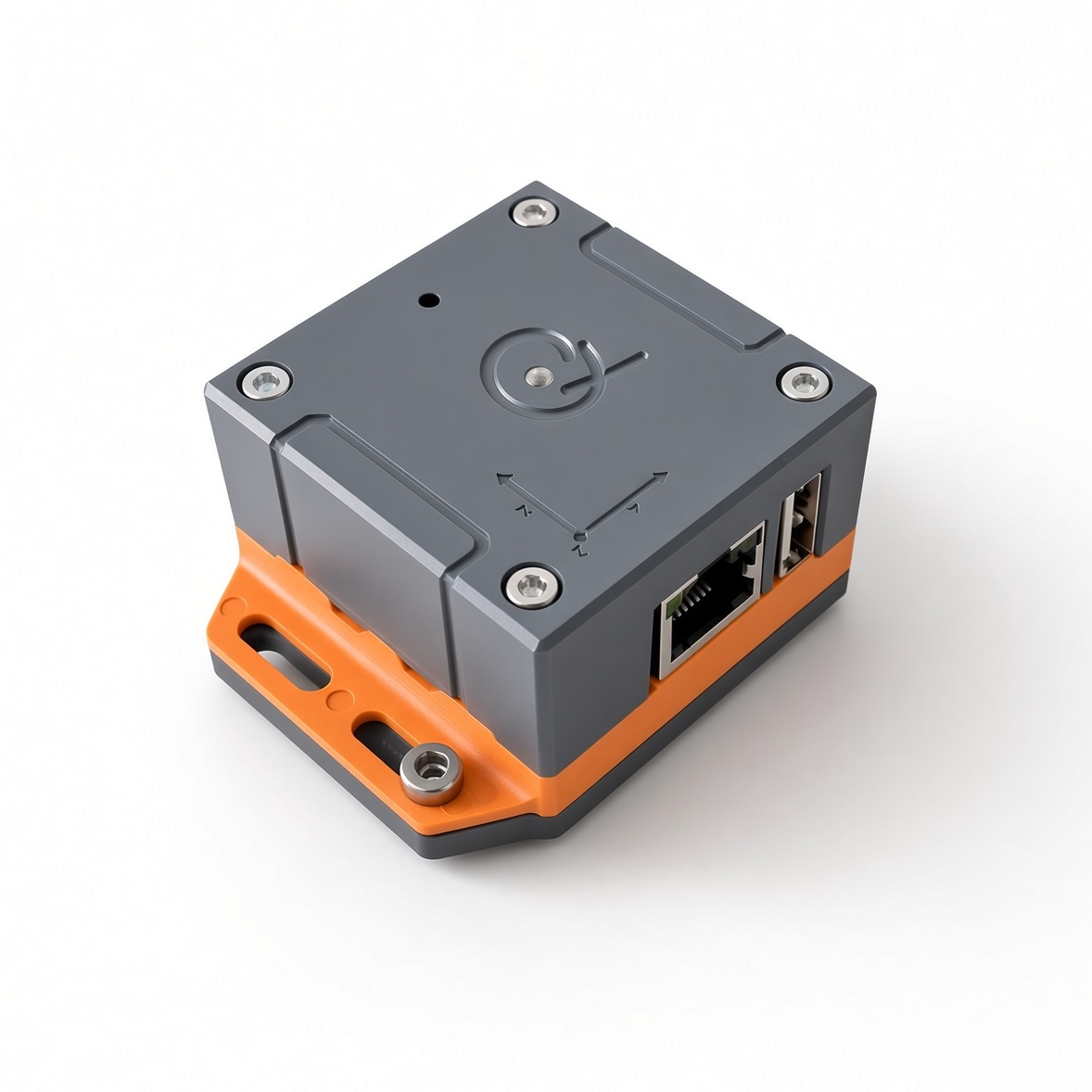
Built to be deployed by the hundred
The MEMS node runs the same firmware and speaks the same interfaces as HiDRA. What changes is the cost and effort of adding one more.
A 20-bit accelerometer sensitive enough for seismic event detection, not only strong-motion recording.
40–500 SPS selectable sampling and a selectable 2, 4 or 8 g range, so the same hardware suits structural and seismic work.
Deploy in buildings, tunnels or field enclosures without pulling a dedicated data run to every node.
A tailored NTP implementation disciplines the clock over the network. No GNSS antenna, no cable run, no sky-view requirement. That is what makes dense arrays affordable, and indoor deployment possible at all.
Each one runs the analysis stack on its own quad-core processor. Adding the twentieth node adds the processing for it too, so the central system never becomes the bottleneck.
At 50 × 50 × 40 mm it mounts on walls, floors and structural elements without an equipment cabinet.
Industrial pSLC NAND stores waveforms locally when the network drops and forwards them automatically on reconnect.
SeedLink v3, FDSN WebService and StationXML on every node — the fleet looks identical to your software whichever sensor it is.
Edge processing
Data products computed on the sensor
Ground motions, intensities, PPSD and spectral ratios are calculated on the node's in real-time. What crosses the network is already a valuable result.
Raw waveforms stream alongside, never instead. Nothing is computed that you cannot recompute.
How Insights works- STA/LTA triggerEvent detection on the instrument itself with configurable thresholds
- Real-time RMSLocal noise conditions, continuously
- PGA / PGVPeak ground acceleration and velocity
- Instrument intensitiesSpectral and Mercalli scales
- PPSDProbabilistic power spectral densities
- H/V spectraSpectral ratios for site response and resonance tracking
- AutocorrelationSingle-station ambient noise autocorrelation, for rapid change detection
- … and moreNew products arrive by firmware update, on instruments already in the field
Technical
specifications
Wiring diagrams and integration guides live in the documentation.
Sensor
- Type
- 3-component MEMS accelerometer
- ADC resolution
- 20-bit
- Sampling rate
- 40–500 SPS, selectable
- Acceleration range
- ±2 g, ±4 g or ±8 g, selectable
- Dynamic range
- ~102 dB at ±2 g (~17 ENOB)
- Self-noise
- 22.5 μg/√Hz at ±2 g
- Noise density
- -82 dB flat relative to 1 m²/s⁴/Hz
- Frequency response
- flat
Connectivity, power & timing
- Network
- Ethernet
- Power
- 5 V USB
- Power consumption
- 1 W
- Time synchronisation
- Tailored NTP; Temperature compensated with subsample accuracy <1 ms
Physical
- Dimensions
- 50 × 50 × 40 mm
- Operating temperature
- −20 °C to +70 °C
- Storage temperature
- −20 °C to +70 °C
Computing, storage & interfaces
- Processor
- Quad core
- Storage
- Industrial pSLC NAND
- Firmware
- Customizable SeismiQ firmware, OTA A/B updates
- Data access
- MiniSeed, SeedLink, FDSN WebService, StationXML
- Real-time products
- PGA/PGV, instrument intensities, PPSD, H/V spectra and more
- Custom processing
- Project-specific plugins run on the instrument itself
- Calibration
- Factory-calibrated, optional site calibration through local and remote interfaces
Questions we get asked
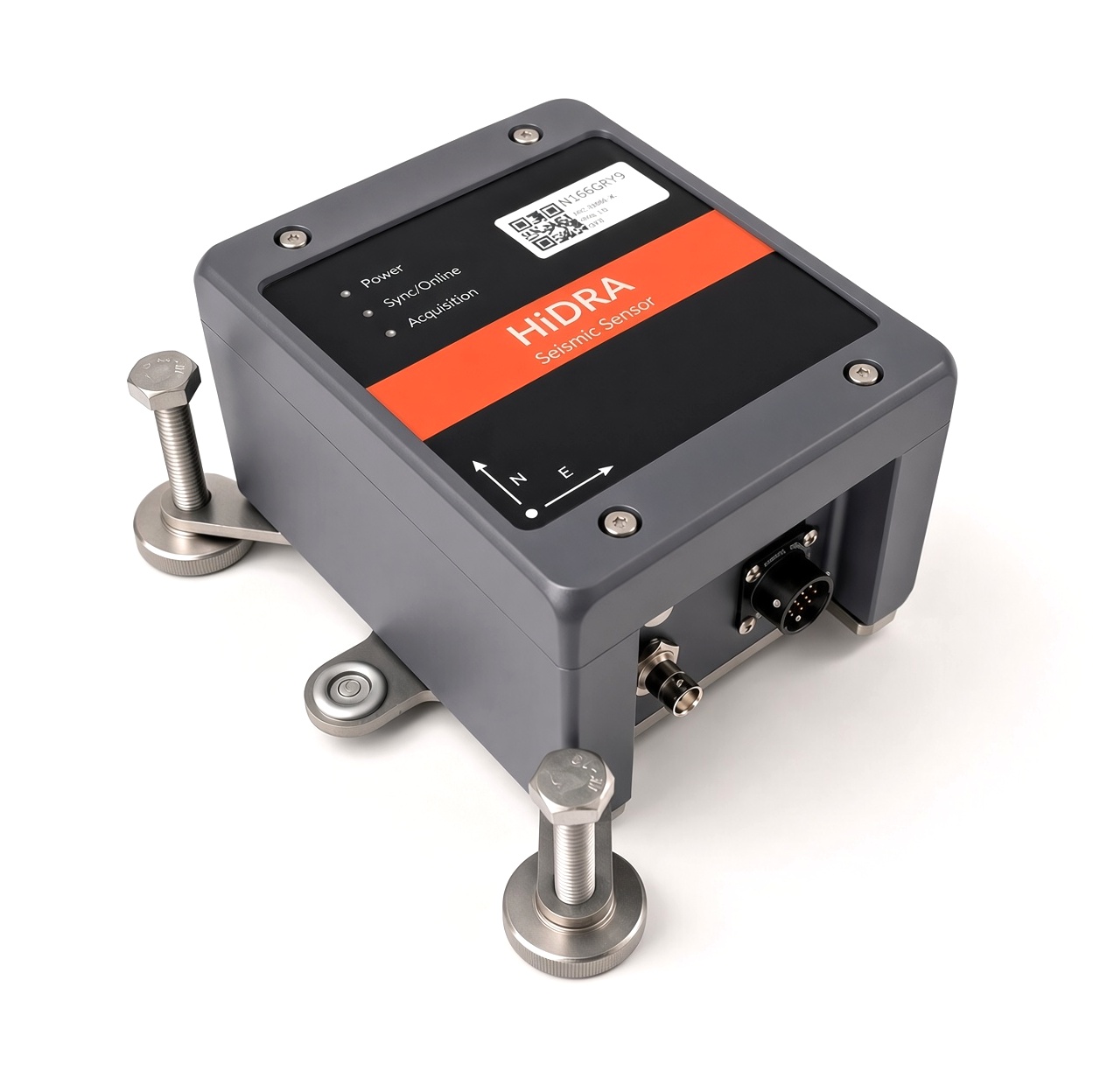
HiDRA is a six-channel instrument — three short-period velocity channels with a 24-bit ADC and 139 dB of dynamic range, plus three 20-bit acceleration channels, recording at once. It covers earthquake monitoring and strong motion from one station. The MEMS node is a 20-bit accelerometer optimised for dense, cost-effective deployments. Both run the same customizable firmware and expose identical data interfaces.
Other sensors
Tell us what you need to monitor.
Site selection, power budget, FDSN integration — we will scope it with you.