Products
Three sensors, one platform
The sensing chain differs. The firmware, the interfaces and the management layer do not — so a mixed network still looks like one network to your software.
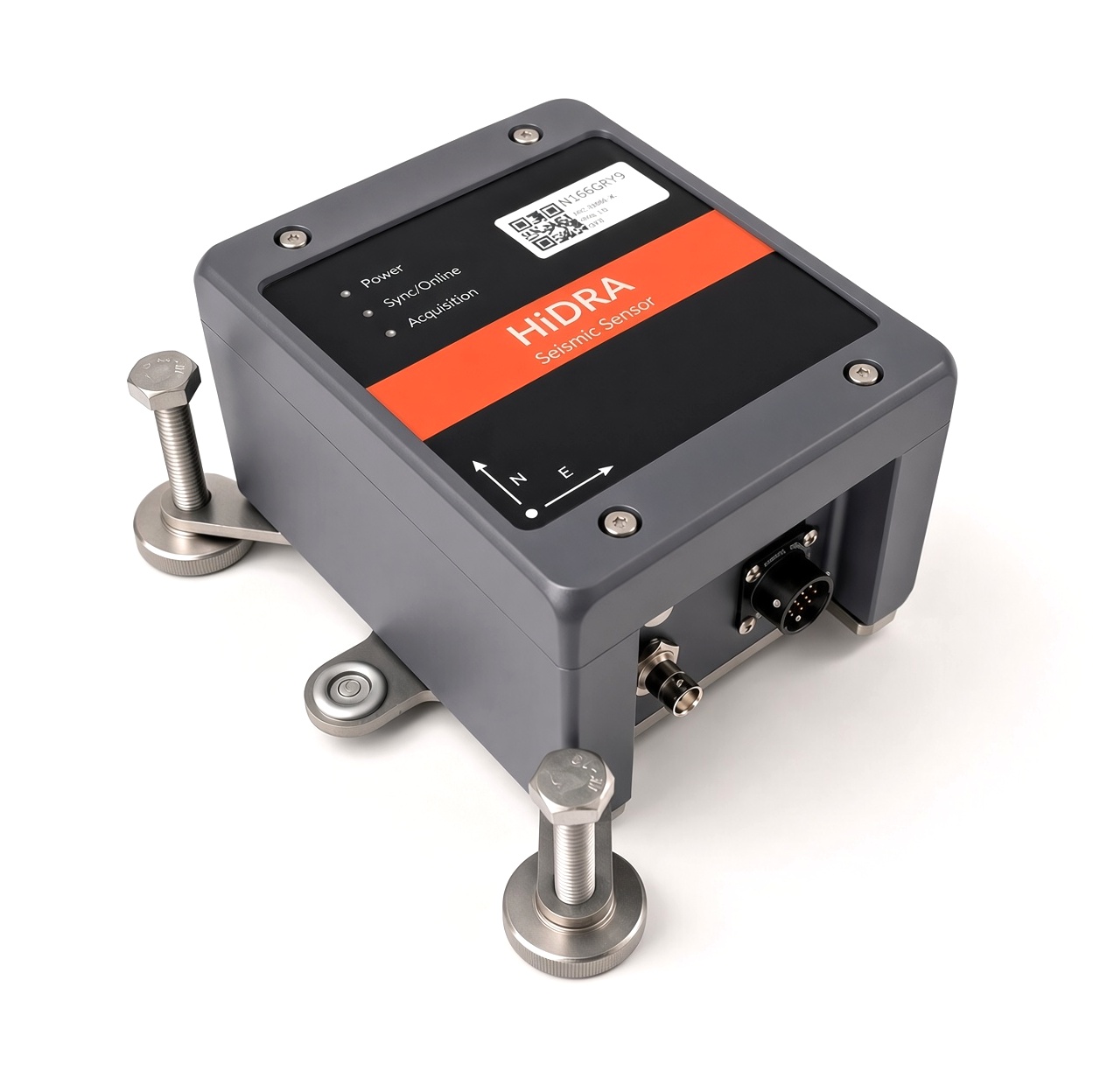
For local and regional seismicity monitoring, and strong-motion recording
Six channels in one instrument: three short-period velocity channels for earthquake monitoring, and three 20-bit acceleration channels for strong motion — recording simultaneously. Most operators build two separate networks to cover both. Sensor and digitiser are integrated too, so a station is one thing to buy, install and configure rather than three.
6-channel · 40 to 500 SPS · Short-Period+MEMS · IP67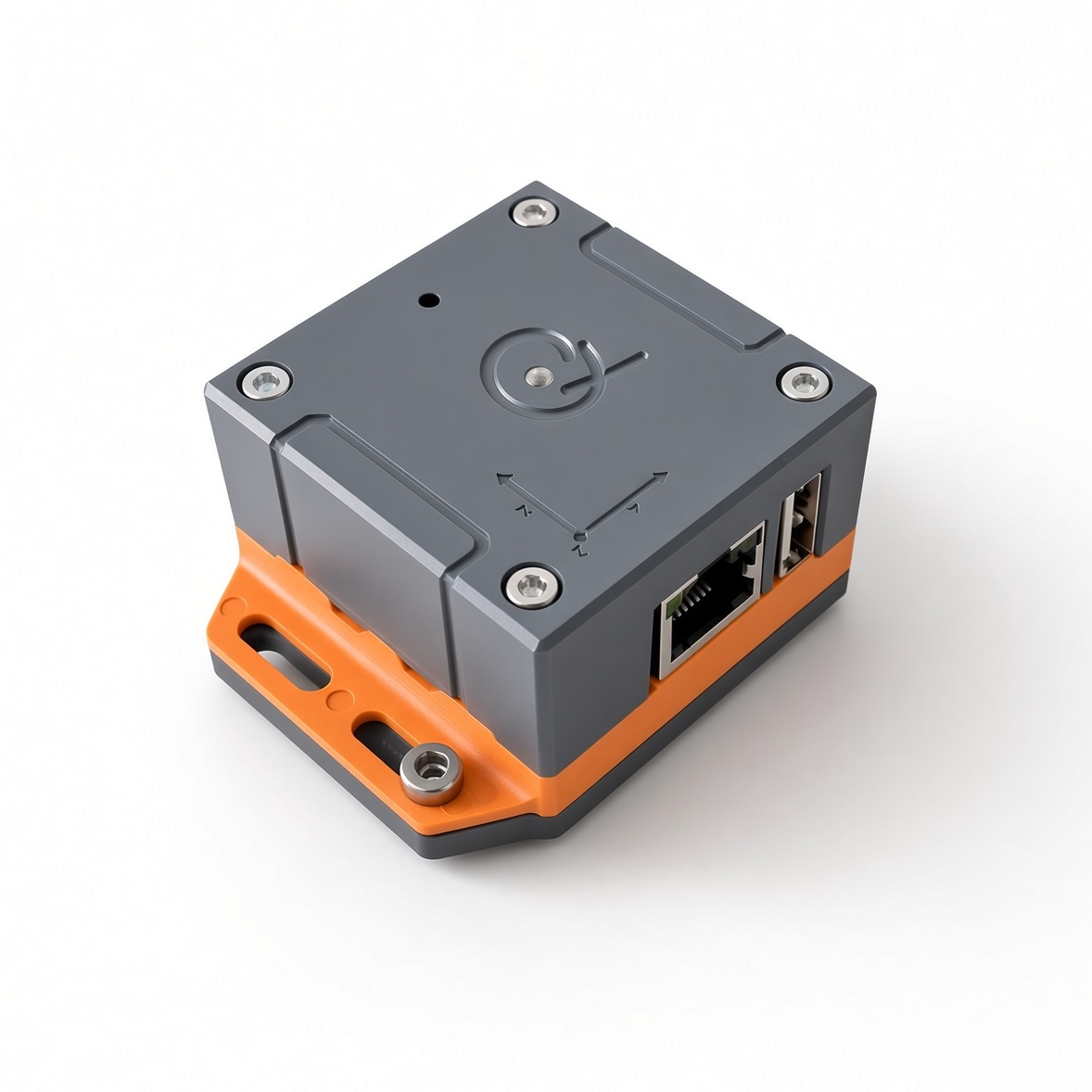
Designed for seismic and strong-motion monitoring
Low-noise high-resolution accelerometer with intelligent edge processing for seismic networks where node count matters — instrumenting a building or a city block rather than a handful of vaults. This is the instrument that enables scalable seismic networks.
Compact · Accelerometer · Low-noise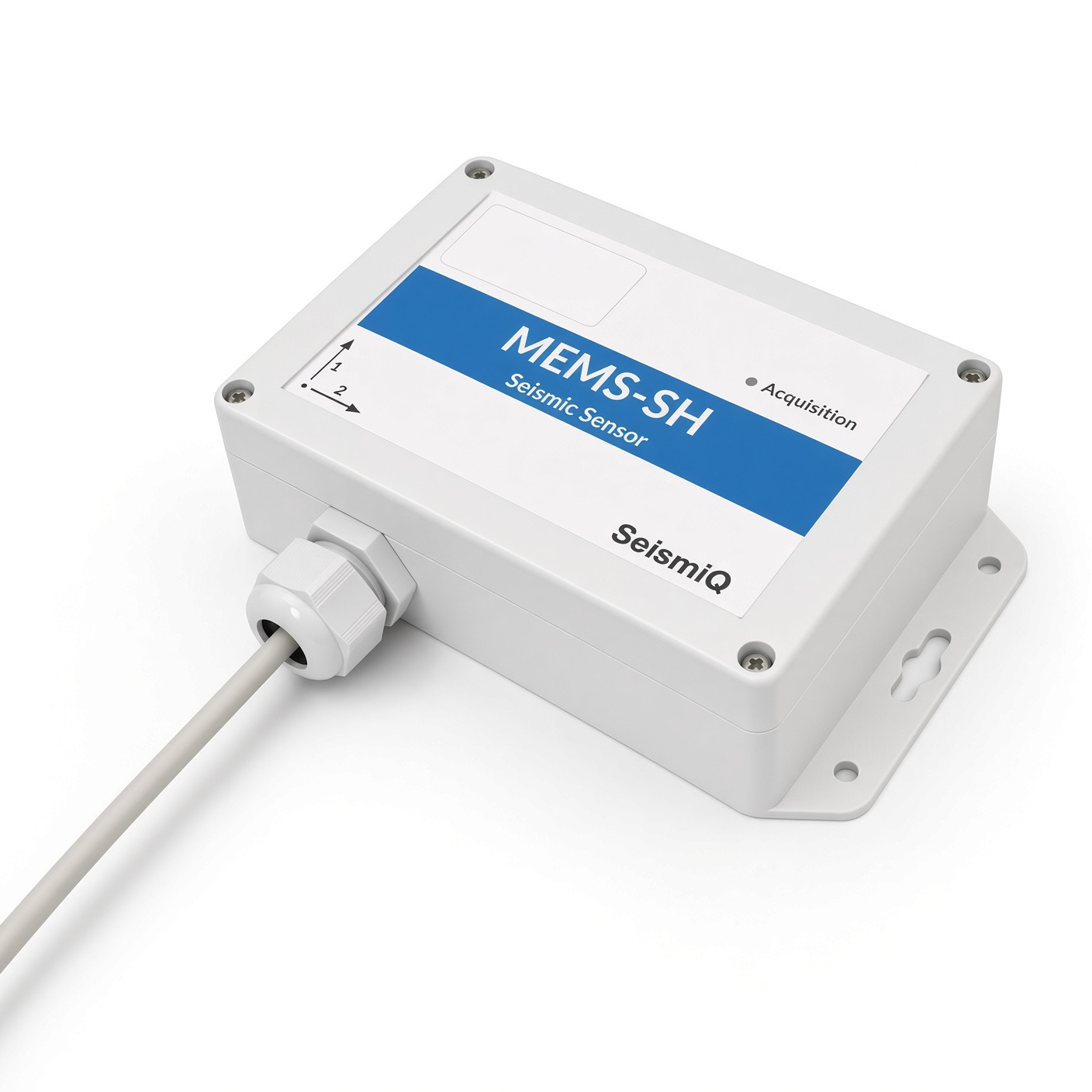
Seismic monitoring for buildings and structures
The compact intelligent accelerometer for seismic and structure health monitoring enabling scalable large seismic networks. The accelerometer is based on the low-noise high-resolution MEMS technology to sense impacts of earthquakes and induced vibrations.
IP68 · Accelerometer · PoE/DC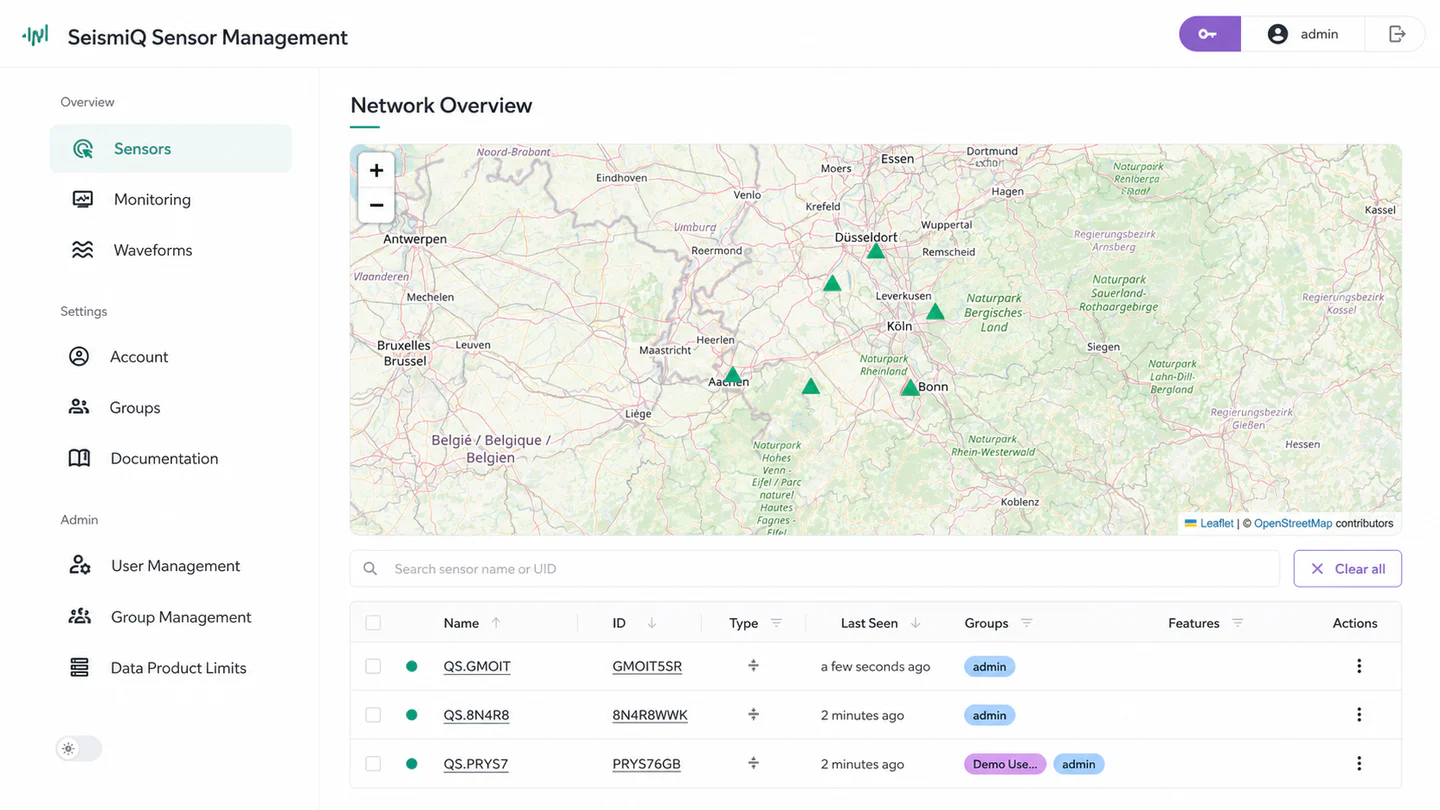
Included with every sensor
One place to operate every sensor.
SeismiQ Insights brings fleet health, remote configuration, secure OTA updates, and standards-based data access into one view.
- Fleet visibility
- Status and recent activity across the network.
- Remote configuration
- Change acquisition settings on one node or a group.
- Secure OTA
- Verified A/B updates with automatic rollback.
- Open data access
- SeedLink v3, FDSN WebService, and StationXML.
Which one do you need?
Resolution and sub-millisecond timing are what make phase picks and hypocenters trustworthy. Choose it when the answer has to survive review.
If you need coverageMEMSAt 1 W a node, instrumenting a campus or a corridor stops being a budget argument. Choose it when node count is the variable that matters.
If you are wiring a building or structureMEMS-SHPower and data on one Ethernet run, in an enclosure meant for structural elements. Choose it when the site already has network, not power.
Still unsure? Send us the site and the signal you care about — we will tell you which one fits, including when the answer is none of them.
Side by side
| Specification | HiDRA | MEMS | MEMS-SH |
|---|---|---|---|
| Type | Short-period + accelerometer | Accelerometer | Accelerometer |
| Channels | 6 — 3 velocity, 3 acceleration | 3 | 3 |
| ADC resolution | 24-bit / 20-bit | 20-bit | 20-bit |
| Dynamic range | 139 dB velocity | 102 dB acceleration | 102 dB acceleration |
| Acceleration range | ±2 / ±4 / ±8 g | ±2 / ±4 / ±8 g | ±2 / ±4 / ±8 g |
| Sampling rate | 40–500 SPS selectable | 40–500 SPS selectable | 40–500 SPS selectable |
| Network | Ethernet, optional LTE | Ethernet | Ethernet, PoE |
| Power | 9–36 V DC, ~5 W | 5 V USB, 1 W | PoE 48 V or 9–48 V DC |
| Timing | GNSS PPS, sub-ms | NTP, sub-ms | NTP, sub-ms |
| Enclosure | IP67 field | Compact, indoor | IP68 structural |
| Operating temperature | −20 to +85 °C (−40 °C on request) | −20 to +70 °C | −20 to +70 °C |
| Firmware & interfaces | Shared | Shared | Shared |
An em dash means the figure does not apply to that sensor, not that it is unknown.
Where the saving comes from
Not the sensing chain. HiDRA is a 24-bit ADC with 139 dB of dynamic range and sub-millisecond timing. The cost comes out of integration — the transducer and the digitiser are one instrument rather than two boxes and a cable — and out of fleet operation, which removes the per-station labour that usually dominates what a network costs to run.
What you are committing to
Buying an instrument should not lock you into a closed workflow
Direct sale. The hardware is yours, the network is yours, and platform access comes with it. There is no per-seat licence and no subscription standing between you and your own sensors.
MiniSEED waveforms, StationXML metadata, QuakeML catalogs. Everything the network produces is in a format your existing tooling already reads, and will still read in twenty years.
Customizable firmware supports project-specific processing. SeedLink and FDSN keep live and archived data accessible through established tools rather than a proprietary export path.
Not sure which sensor fits?
Tell us the site, the signal you care about and the node count. We will tell you honestly which one to use — including when it is not ours.