Seismic networks • Geothermal monitoring • Research institutions
Research-Grade Precision for Field Networks
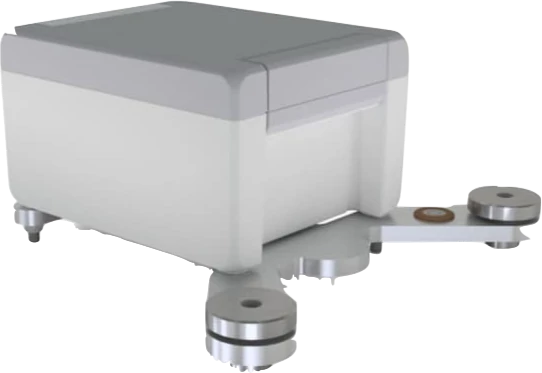
HiDRA is our flagship short-period seismometer – built for demanding field conditions where signal resolution and timing accuracy are non-negotiable. From microseismic monitoring during well injection to regional network deployments, HiDRA delivers 24-bit precision with a field-hardened design.
24-bit ADC
139 dB dynamic range – resolves micro-tremors without saturating on major events
Adjustable Gain
1×–4× analog pre-amp and 50–500 Hz sampling – tune sensitivity without swapping hardware
Browser-Based Setup
Configure in the field from any smartphone – no app or laptop required
GNSS Time Sync
Sub-millisecond timing accuracy for phase-arrival correlation across distributed networks
Built for the demands of professional seismic networks
HiDRA combines research-grade measurement quality with the reliability and remote-management capabilities that professional network operators depend on. Whether you’re running a 3-station microseismic array or a 200-node regional network, HiDRA delivers the data quality and operational control you need.
- 3-component 1-second seismometer – detects local, regional, and teleseismic events
- Ultra-low noise 24-bit ADC (139 dB) – resolves the weakest ground motion signals
- Selectable 50 / 100 / 200 / 400 / 500 Hz sampling and 1×–4× analog gain
- Wide voltage input (9–36 V) – compatible with solar, battery, and mains power
- External GNSS PPS time synchronisation – sub-millisecond timing accuracy
- Industrial pSLC NAND storage – data integrity through years of unattended operation
- SeedLink v3 & FDSN WebService – compatible with ObsPy, SeisComP, and IRIS tools
- Over-the-air firmware updates – keep the entire fleet current without site visits
Features in Depth
Every detail engineered for continuous, unattended field operation.
Equipped with a Quad Core processor, HiDRA runs the full SeismiQ firmware stack – including real-time ground motion analysis, PPSD computation, and AI-based earthquake detection – directly on the sensor, without any cloud dependency.
The 24-bit ADC delivers a 139 dB dynamic range, resolving the faintest micro-tremors and staying on-scale through major earthquakes without saturating. Adjustable 1×–4× analog pre-amplification lets you match sensitivity to your target signal without swapping hardware.
HiDRA accepts an external GNSS pulse-per-second signal for sub-millisecond timing accuracy. Precise phase-arrival times are essential for hypocenter location and multi-sensor correlation across your network.
A common source of failure in field sensors is corrupted memory. HiDRA relies on industrial-grade pSLC NAND – rated for extreme temperatures and high write cycles – so your data survives years of continuous unattended operation.
Wide voltage input (9–36 V) makes HiDRA compatible with solar, battery, and mains power in any combination. Remote configuration, firmware updates, and health monitoring are handled over-the-air – no site visits required after installation.
Technical Specifications
Full specifications, wiring diagrams, and integration guides are available in the SeismiQ documentation.
| Sensor | |
|---|---|
Type | 3-component short-period seismometer |
ADC resolution | 24-bit |
Dynamic range | 139 dB |
Sampling rate | 50 / 100 / 200 / 400 / 500 Hz (selectable) |
Analog gain | 1× 2× and 4× pre-amplification |
| Connectivity & Physical | |
Network | Ethernet, optional LTE |
Enclosure rating | IP64 |
| Timing & Power | |
Time synchronisation | External GNSS PPS, sub-millisecond accuracy |
Power input | 9 – 36 V DC (solar, battery, or mains) |
Power consumption | ~5 Watts (typical, depends on configuration) |
| Computing & Storage | |
Processor | Quad Core |
Storage | Industrial pSLC NAND (high write-cycle rated) |
| Software & Interfaces | |
Firmware | Open-source SeismiQ firmware, OTA updates |
Data access | SeedLink v3, FDSN WebService, StationXML metadata |
Real-time products | PGA/PGV, instrument intensities, PPSD, H/V spectra, AI phase detection |
Frequently Asked Questions
Can’t find your answer? Talk to our team.
HiDRA accepts 9–36 V DC, making it compatible with solar panels, lead-acid or lithium batteries, and mains adapters – in any combination. This wide input range is deliberately chosen so you can design your power budget around local availability without additional voltage regulators.
HiDRA accepts a pulse-per-second (PPS) signal from an external GNSS receiver, keeping the internal clock aligned to UTC within sub-millisecond accuracy. Precise timing is essential for accurate phase-arrival picks and reliable hypocenter location when correlating across multiple sensors.
Yes. Every HiDRA runs its own SeedLink v3 server and exposes a standard FDSN WebService endpoint. Any software that speaks SeedLink or FDSN – including ObsPy, SeisComP, Earthworm, and IRIS tools – connects without extra configuration.
Yes. The open-source SeismiQ firmware supports custom signal processing plugins that run directly on the Quad Core processor. Computed data products are streamed in real time alongside raw waveforms via SeedLink, so your analysis stays at the edge.
Updates are pushed securely over-the-air using an A/B partition scheme. The new image is fully verified before the sensor switches over, and an automatic rollback activates if the new version fails to boot. No physical access is required after initial installation.
We supply individual units for pilot projects as well as large-scale network deployments. Contact us for volume pricing and lead times.
Ready to deploy HiDRA?
Our team can help you design a monitoring network that fits your application – from site selection and power budgeting to FDSN integration and data archiving. Most teams are streaming live data within a day of unboxing.
Talk to Our Experts